Last updated: March 2026
How Much Are Antique Tools Worth?
Antique and vintage hand tools. From Stanley planes and hand-forged axes to blacksmith tools and early woodworking equipment. Are collected by both tool enthusiasts and craftspeople who appreciate quality construction. Our AI identifies your tool's type, likely maker, and era to provide a market estimate. Even old tools that seem common may have significant value if they're from the right maker or period.
Also available on


What do you want to value?
Why Knowing Your Antique Tools Value Matters
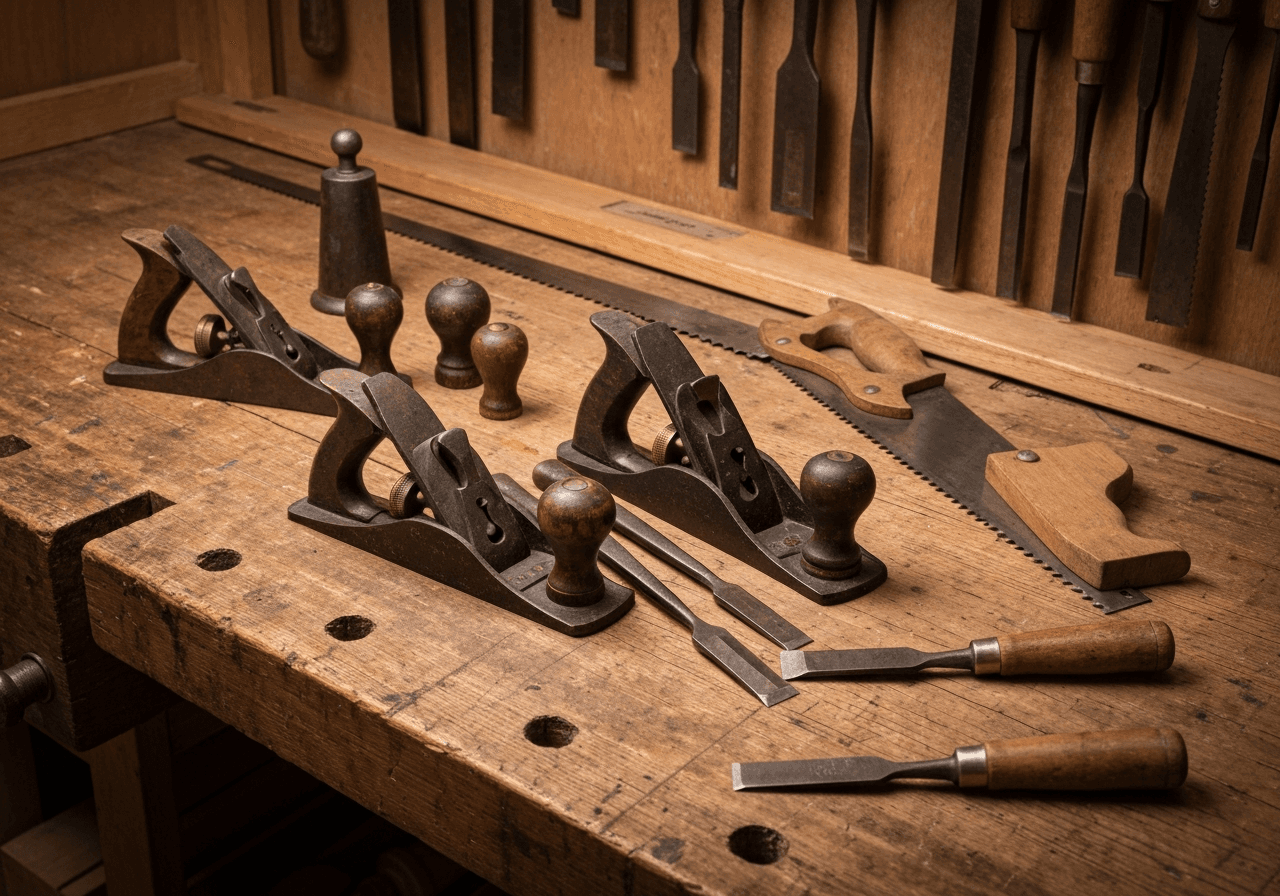
Antique tools are one of the most underappreciated collectibles. Quality hand tools from the 1800s-early 1900s were built to last and are often superior to modern equivalents, creating demand from both collectors and active woodworkers. A Stanley #1 bench plane can sell for $3,000-$5,000+. Norris infill planes: $1,000-$10,000+. Signed early American tools: $100-$2,000+. Even common Stanley planes from the early 1900s are worth $20-$100. Many workshop cleanouts and estate sales include tools worth $50-$500 that sell for scrap metal prices because no one checks their value.
Key Factors That Affect Antique Tools Value
Understanding what drives the price of antique tools helps you get the most accurate valuation.
Maker & Brand
Most valuable makers: Norris (British infill planes) $1K-$10K+, Stanley (early production, rare models) $20-$5K+, Lie-Nielsen (modern premium, steady value), early American signed tools ($100-$2K+). Other collected brands: Record, Millers Falls, Sargent, Ohio Tool Co, Disston (saws).
Tool Type
Bench planes (especially small sizes #1, #2): $100-$5,000+. Molding and specialty planes: $20-$500+. Axes and broad axes (signed, early American): $50-$1,000+. Measuring tools (levels, rules, squares): $10-$200+. Saws (Disston, hand-made): $20-$300+.complete tool chests with tools: $500-$5,000+.
Age & Rarity
18th century and earlier hand-forged tools: $50-$2,000+ (age, signed, and provenance add value). Early Stanley planes (pre-1910): significant premiums. Patented tools with unique mechanisms: collector premiums. Tools from specific historical contexts (shipbuilding, early American craft) are particularly valued.
Condition & Usability
Working, usable condition: highest value (collector + user demand).complete with all parts (blades, caps, handles): full value. Rust and pitting: reduces value 20-60% depending on severity. Missing parts: significant reduction. Restored tools (cleaned, sharpened): can increase value for users but purist collectors prefer original patina.
Stanley Type Study
Stanley bench planes are collected by 'type'. manufacturing variations that help date the plane. Earlier types (pre-1910) are more valuable. Features like lateral adjustment levers, frog designs, and handle shapes identify the type. Type 1-8 Stanley planes command significant premiums.
Tips for Valuing Antique Tools
Get the most accurate valuation by following these tips when photographing your antique tools.
Check for maker's marks, stamps, or etchings on metal parts. These identify the manufacturer
Look at the overall construction quality. Hand-forged, cast iron, and high-quality wood indicate value
Don't aggressively clean or refinish tools before valuation. Original patina can add value
Photograph any marks, stamps, or patent dates clearly
Antique Tools Market Insights
The antique tool market is driven by two distinct buyer groups: collectors who value rarity and history, and craftspeople who want high-quality working tools. This dual demand supports prices across the quality spectrum. The market is well-served by specialty auction houses (Brown Tool Auctions), online dealers, and active collector organizations (EAIA, PAST). Social media woodworking content has introduced younger audiences to quality hand tools, growing the market. Stanley planes remain the backbone of the market, with comprehensive type studies and price guides available.
Find Out What Your Antique Tools Are Worth
Upload a photo now and get a free AI-powered valuation in seconds. No sign-up required.
Antique Tools Valuation FAQ
What antique tools are worth the most?
Stanley #1 bench plane ($3,000-$5,000+), Norris A1 infill plane ($5,000-$10,000+), early signed American tools ($100-$2,000+), patent model tools ($500-$5,000+). Even common Stanley #4 and #5 bench planes from pre-1910 are worth $50-$200.
Are old Stanley tools valuable?
Many are. Stanley Bailey bench planes (#1-#8) are the most collected. Value depends on type (manufacturing era) and model number. The #1 is the most valuable due to small size and low production. Pre-1910 planes of any number command premiums. Even mid-century Stanley tools have modest collector value ($10-$50).
Should I restore old tools before selling?
It depends on the buyer. Active woodworkers prefer functional restoration (removing rust, sharpening, replacing handles). Purist collectors prefer original condition with natural patina. A light cleaning is generally safe, but aggressive restoration (repainting, replating) can reduce collector value.
What should I do with an inherited tool collection?
Don't throw anything away without checking values. Look for maker's marks on all metal tools. Separate hand planes, measuring tools, and edged tools (most likely to be valuable) from common items. Photograph the best pieces for appraisal. For large collections ($1,000+), specialty tool auction houses achieve the best prices.
Where can I sell antique tools?
Brown Tool Auctions and Martin J. Donnelly Auctions specialize in antique tools and achieve excellent prices. eBay is the largest general marketplace. Antique tool meets and swap meets (EAIA, PAST events) offer direct sales to knowledgeable buyers. Local antique dealers handle mid-range items.