Last updated: March 2026
What Rock or Mineral Is This?
Found an interesting rock and want to know what it is? Our AI identifies rocks, minerals, crystals, and gemstones from a photo. Upload a picture and get the mineral name, type (igneous, sedimentary, metamorphic), hardness, composition, and estimated collector value in seconds.
Also available on


What do you want to value?
Why Knowing Your Rocks & Minerals Value Matters
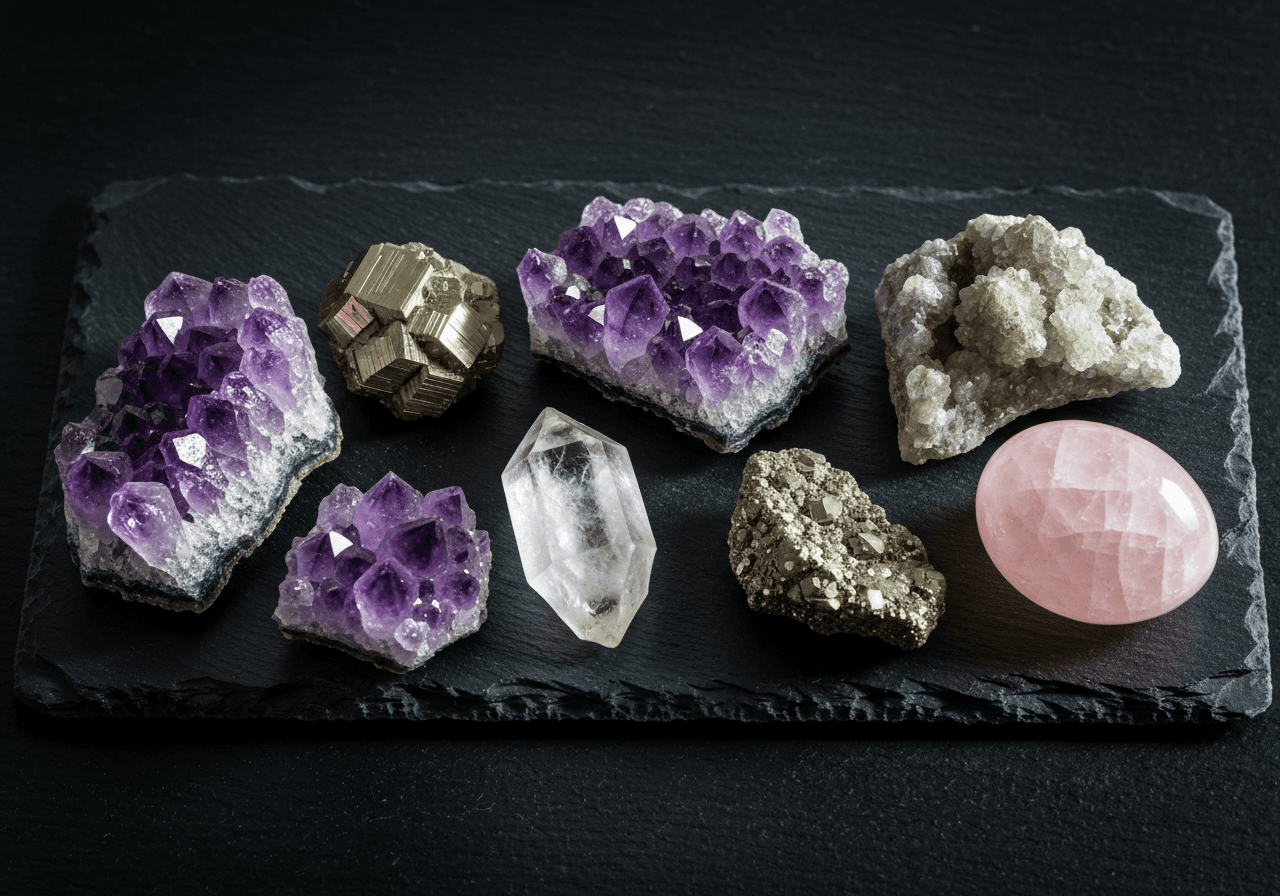
Most rocks are worth pennies, but certain minerals, crystals, and gemstones found in nature can be worth significant money. A large amethyst geode can be worth $500-$5,000. Turquoise nuggets: $5-$50/gram for quality material. Gold-bearing quartz: value depends on gold content. Meteorites: $1-$1,000/gram depending on type. Even common minerals like large quartz crystals, rose quartz, and pyrite specimens have collector value of $10-$100+. Knowing what you have is the first step to knowing what it's worth.
Key Factors That Affect Rocks & Minerals Value
Understanding what drives the price of rocks & minerals helps you get the most accurate valuation.
Mineral Type
Common rocks (granite, limestone, sandstone): minimal value. Semi-precious minerals (amethyst, citrine, rose quartz): $5-$500+ depending on size and quality. Precious minerals (emerald, ruby, sapphire in matrix): $100-$10,000+. Meteorites: $1-$1,000/gram. Gold specimens: value based on gold content + specimen premium.
Size & Quality
Larger, more perfect specimens are exponentially more valuable. A 1-inch amethyst point: $2-$10. A 12-inch amethyst geode: $200-$2,000. Museum-quality large specimens: $5,000-$50,000+.
Crystal Form
Well-formed crystals (visible crystal structure, terminations, clarity) are worth far more than massive (formless) specimens. A perfect quartz crystal point is worth 10-50x more than an equivalent weight of milky quartz.
Color & Clarity
Vibrant, saturated colors command premiums. Deep purple amethyst is worth more than pale lavender. Transparent specimens are worth more than opaque. Unusual colors (like blue quartz or watermelon tourmaline) have premium value.
Locality
Specimens from famous mineral localities carry premiums. Herkimer diamonds (quartz from Herkimer County, NY), Sleeping Beauty turquoise (Arizona), and Benitoite (California's state gem) are worth more because of their source.
Tips for Valuing Rocks & Minerals
Get the most accurate valuation by following these tips when photographing your rocks & minerals.
Photograph the specimen in natural daylight for accurate color
Show both a fresh broken surface and the weathered exterior
Include a coin or ruler for size reference
If the specimen has crystal faces, photograph them at an angle that shows the structure
Rocks & Minerals Market Insights
The mineral and crystal collecting market has grown significantly, driven by wellness culture, home decor trends, and social media. Instagram and TikTok have made crystal collecting mainstream. The wholesale crystal market is primarily sourced from Brazil (amethyst, quartz, tourmaline), Madagascar (labradorite, rose quartz), Morocco (geodes, fossils), and China (fluorite). Prices for quality specimens have increased 30-50% over the past 5 years at the consumer level.
Find Out What Your Rocks & Minerals Are Worth
Upload a photo now and get a free AI-powered valuation in seconds. No sign-up required.
Rocks & Minerals Valuation FAQ
How do I identify a rock I found?
Upload a clear photo to our AI tool for instant identification. Key properties our AI analyzes: color, luster (shiny vs. dull), texture (crystalline, granular, glassy), hardness (can it scratch glass?), and crystal structure. For manual identification, test hardness with a steel knife, check the streak color on a tile, and observe the crystal habit.
What rocks are worth money?
Gemstone-quality minerals (ruby, sapphire, emerald in matrix), large crystal specimens (amethyst geodes, quartz clusters), meteorites, gold specimens, and rare minerals (rhodochrosite, tanzanite, alexandrite). Even common minerals can have value if the specimen is large, well-formed, or from a famous locality.
How much is a geode worth?
Small (2-4 inch) quartz geodes: $5-$20. Medium amethyst geodes (6-12 inch): $50-$500. Large cathedral amethyst geodes (2-4 feet): $500-$10,000+. The value depends on crystal quality, color intensity, and overall aesthetic appeal. Rare calcite, celestite, or citrine geodes can be worth significantly more.
Could my rock be a meteorite?
Key signs: unusually heavy for its size, attracted to a magnet, has a dark fusion crust, and shows no quartz or visible crystals. If you suspect a meteorite, photograph it and upload to our tool. Confirmed meteorites are worth $1-$1,000+/gram depending on type.