Last updated: March 2026
How Much Are My Hummel Figurines Worth?
Whether you have rare early trademark figurines, sought-after models like Apple Tree Girl, or a large inherited collection, our AI identifies the Hummel model number, trademark era, size variation, and condition to deliver an accurate market value. From figurines worth hundreds to those worth a few dollars, discover what your Hummel collection is really worth today.
Also available on


What do you want to value?
Why Knowing Your Hummel Figurines Value Matters
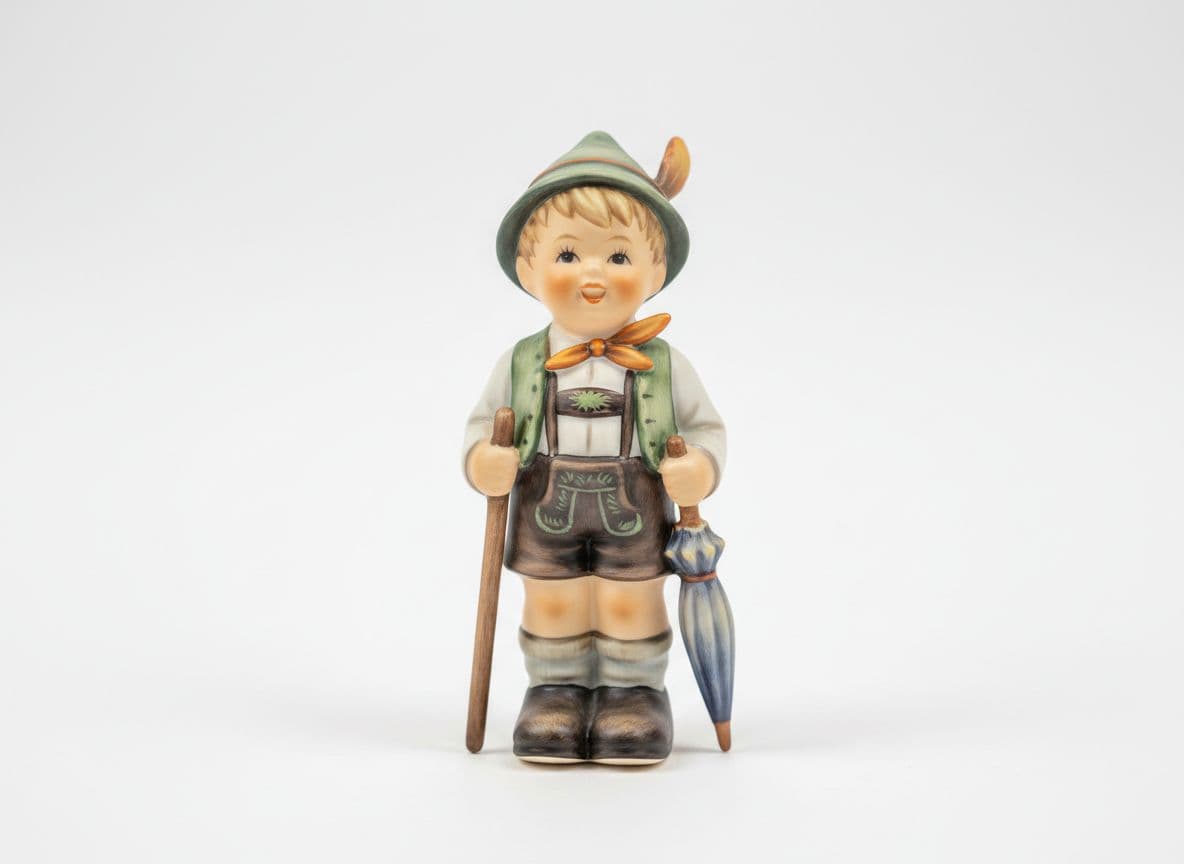
Hummel figurines, produced by W. Goebel in Germany based on Sister Maria Innocentia Hummel's artwork, were once among the most popular collectibles in America. Unfortunately, the market has softened considerably from its peak in the 1980s-1990s. Figurines that once retailed for $100-$300 now commonly sell for $15-$50 on the secondary market. However, certain pieces remain genuinely valuable: early trademark figurines (TMK-1 'Crown' and TMK-2 'Full Bee') can bring $100-$1,000+, and rare models, unusual variations, and large figurines maintain strong collector interest. Before selling a collection for pennies at a garage sale, it's essential to identify whether you have any of the valuable pieces mixed in with common ones.
Key Factors That Affect Hummel Figurines Value
Understanding what drives the price of hummel figurines helps you get the most accurate valuation.
Trademark Era
The trademark on the bottom is the most important value factor. TMK-1 'Crown Mark' (1935-1949) and TMK-2 'Full Bee' (1950-1959) are the most valuable, commanding 5-20x more than modern trademarks. TMK-3 'Stylized Bee' (1960-1972) has moderate collector value. TMK-4 through TMK-8 (1972-present) are generally worth less. Always check the bottom mark first.
Model Number & Rarity
There are over 700 Hummel models, and some are much rarer than others. 'International' figurines, 'Adventure Bound' (Hum 347), and certain early exclusive models bring premium prices.common models like 'Apple Tree Girl' and 'Merry Wanderer' are available in large quantities and are more affordable unless in early trademarks.
Condition
Chips, cracks, repairs, and crazing all reduce value significantly. Even professional repairs reduce value by 50% or more. Figurines with no damage and vibrant, unfaded paint command full market price. Check fingers, noses, and protruding elements carefully. These are the most common damage points.
Size Variation
Many Hummel models were produced in multiple sizes, designated by Roman numerals or slash marks after the model number. Larger sizes and unusual size variations can be worth more. The smallest sizes are often the most common. Oversized 'Jumbo' pieces and very early size designations can carry significant premiums.
Special Editions & Provenance
Figurines from special collections, anniversary editions, and those with documented provenance (especially from the Goebel factory or Hummel museum) carry premiums. Artist-signed pieces, sample or prototype figurines, and pieces with unique colorwork are especially valuable to advanced collectors.
Tips for Valuing Hummel Figurines
Get the most accurate valuation by following these tips when photographing your hummel figurines.
Photograph the figurine from the front and one side in good lighting
Always include a clear, well-lit photo of the trademark on the bottom. This is the most important detail
Note the model number (usually incised on the bottom) and include it in your listing
Show any damage, repairs, or crazing in close-up photos. Condition is critical for valuation
Hummel Figurines Market Insights
The Hummel figurine market has declined significantly from its peak, with most common figurines selling for well below original retail prices. The core collector base has aged, and younger generations have shown limited interest. eBay is the primary marketplace, with specialized Hummel dealers and auctions handling higher-end pieces. Despite the overall decline, early trademark pieces (TMK-1 and TMK-2) have maintained or increased in value, as they represent genuine antiques with historical significance. The German market remains stronger than the US market for many models. Large collections are best sold individually for rare pieces and in lots for common ones. The market appears to be near its bottom, making current prices potentially attractive for new collectors.
Find Out What Your Hummel Figurines Are Worth
Upload a photo now and get a free AI-powered valuation in seconds. No sign-up required.
Hummel Figurines Valuation FAQ
Why have Hummel figurines lost so much value?
The Hummel market peaked in the 1980s-1990s when baby boomers were actively collecting. As that generation has aged and begun downsizing, supply has overwhelmed demand. Younger collectors have not replaced them in sufficient numbers. Additionally, Goebel produced millions of figurines, so supply is abundant. Early trademark pieces remain valuable because they are genuinely scarce antiques.
How do I identify the trademark on my Hummel?
Look at the bottom of the figurine for the Goebel mark. TMK-1 features a crown with 'WG.' TMK-2 has a large bumble bee inside a 'V.' TMK-3 has a stylized bee. TMK-4 uses three-line text. TMK-5 has the Goebel name with a small bee. TMK-6 through TMK-8 use updated Goebel logos. The trademark directly corresponds to the manufacturing period and is the single biggest value determinant.
Should I sell my Hummel collection individually or as a lot?
For figurines with early trademarks (TMK-1, TMK-2) or rare models, sell individually to maximize value. For common figurines with later trademarks, selling in lots of 5-10 similar pieces often yields better total returns. Very common figurines may be best donated for a tax deduction rather than sold, as individual sales may not be worth the shipping and listing effort.
Are there any modern Hummel figurines worth collecting?
Current Hummel production is limited, and new pieces are expensive at retail. Some limited-edition and club-exclusive modern figurines may appreciate over time, but the overall trend for modern Hummels on the secondary market is flat. If you enjoy the aesthetic, buy what you love rather than for investment. The market has shown that mass-produced collectibles rarely appreciate in value.