Last updated: March 2026
Are Your Old Coins Worth Money?
Got a jar of old coins from a relative, a coin collection you found in the attic, or just some unusual coins you've been saving? Many old coins are worth significantly more than their face value. Our AI identifies your coin's type, country, date, mint mark, and condition to give you an instant value estimate. From ancient Roman coins to early American copper, if it's old and it's a coin, we can help you find out what it's worth.
Also available on


What do you want to value?
Why Knowing Your Old Coins Value Matters
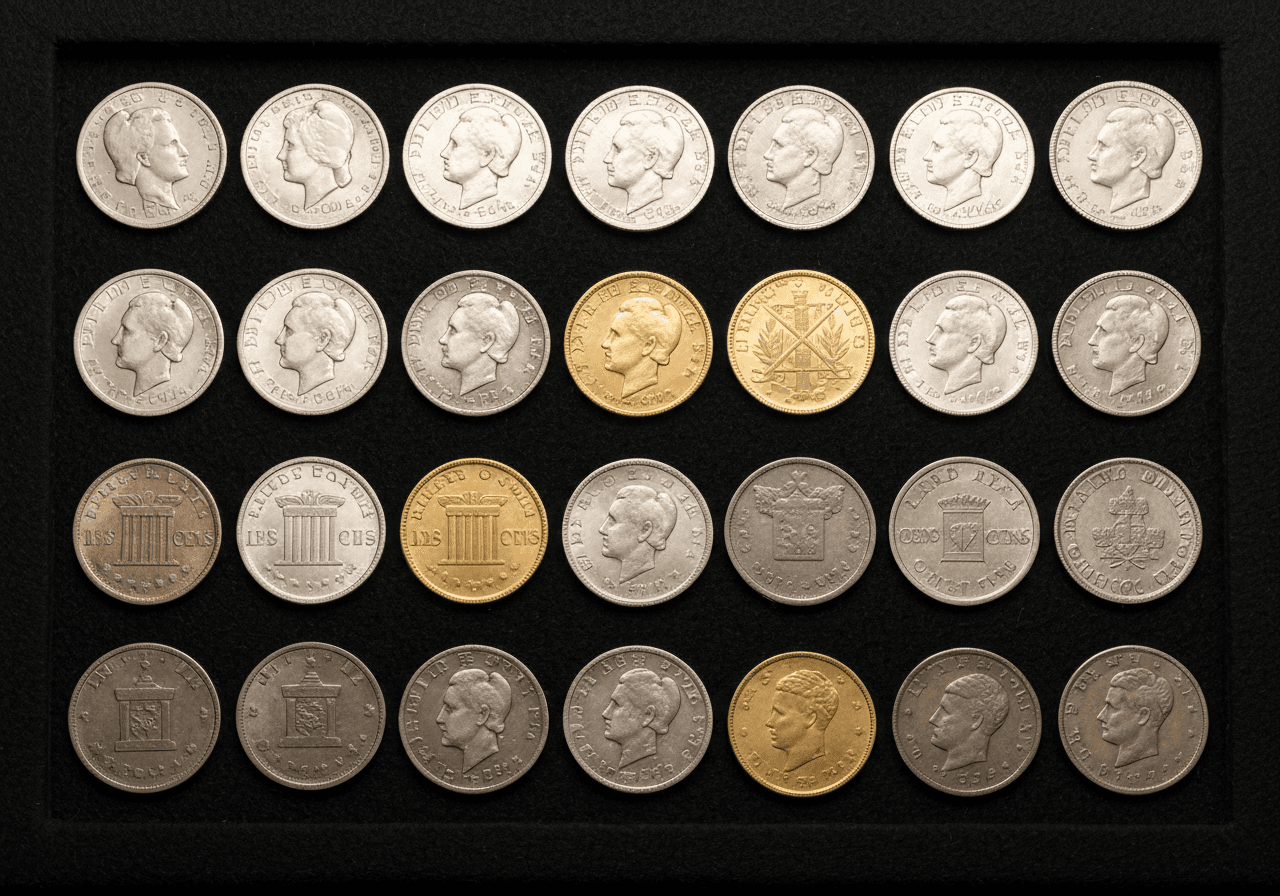
Old coins are one of the most commonly inherited and undervalued possessions. Millions of Americans have coins passed down from parents and grandparents without knowing their value. A coffee can of old pennies might contain a $1,000 1914-D cent. A bag of 'old silver coins' could include key dates worth hundreds each. Foreign coins in a box might include ancient or medieval coins worth $50-$500+. Even coins that aren't rare individually add up. A jar of pre-1965 US silver coins is worth 15-25x face value for silver content alone. The biggest risk isn't that your coins are worthless. It's selling valuable coins for face value because you didn't check.
Key Factors That Affect Old Coins Value
Understanding what drives the price of old coins helps you get the most accurate valuation.
Age & Historical Period
Generally, older coins are rarer and more valuable, but age alone doesn't determine value. A 2,000-year-old Roman bronze coin might be worth $10-$50 (millions were minted), while a 1913 Liberty nickel is worth $3-$5 million (only 5 exist). The key is how many survive and how many collectors want them.
Metal Content
Many old coins contain gold, silver, or copper that provides a minimum 'melt value.' Pre-1965 US silver coins are worth 15-25x face value. Gold coins are worth at least their gold weight ($200-$2,000+ depending on size). Even old copper coins have modest metal value above face value.
Country & Series
US coins are the most actively collected and generally command the highest premiums. British, Canadian, Australian, and European coins also have strong collector markets. Ancient Greek and Roman coins have a dedicated following. Chinese, Japanese, and Islamic coins are increasingly collected with growing Asian wealth.
Condition & Preservation
Old coins in exceptional condition are dramatically more valuable than worn examples. A coin that survived 100+ years in near-mint condition is rare by definition. Environmental factors matter too: coins stored in dry conditions with minimal handling are preferred over corroded, cleaned, or damaged pieces.
Provenance & Documentation
Old coins with documented history. Known collections, auction records, historical significance.command premiums. A coin owned by a famous collector or featured in a reference book can be worth 2-5x a comparable example without provenance.
Tips for Valuing Old Coins
Get the most accurate valuation by following these tips when photographing your old coins.
Don't clean old coins. Cleaning destroys patina and collector value
Photograph both sides in natural light against a plain background
If you have many coins, start with the oldest and most unusual-looking ones
Silver and gold coins should be checked for precious metal content as a minimum value
Old Coins Market Insights
The market for old coins is one of the most established collectibles markets, with active trading for over 500 years. The rise of online marketplaces has dramatically expanded the buyer pool, generally pushing prices higher for genuinely rare pieces while making common coins easier to research and trade. Third-party grading services (PCGS, NGC) have brought transparency and confidence to the market. World coins and ancients have seen particularly strong growth as collectors in Asia and the Middle East enter the market. Estate coins. Old collections coming to market. Remain one of the best sources of undervalued material.
Find Out What Your Old Coins Are Worth
Upload a photo now and get a free AI-powered valuation in seconds. No sign-up required.
Old Coins Valuation FAQ
How do I know if my old coins are silver or gold?
For US coins: most dimes, quarters, half dollars, and dollars dated 1964 and earlier are 90% silver. Gold coins include $1, $2.50, $5, $10, and $20 denominations minted before 1933. Check the edge. Silver coins have a solid gray edge, clad coins show copper. Gold coins have a distinctive yellow color and feel heavier than expected for their size.
Are foreign old coins valuable?
Many are, especially British sovereigns and crowns, Canadian silver dollars, Mexican silver pesos, German thalers, and ancient Greek/Roman coins. Even common foreign silver coins have melt value. Our AI can identify and value coins from virtually any country and era.
I inherited a coin collection. What should I do first?
First, don't clean anything. Second, take photos of the most unusual and oldest coins for AI valuation. Third, look for any coins in holders or flips with notations. These were likely identified as valuable by the original collector. Fourth, check for silver and gold content. Finally, for collections potentially worth $1,000+, consider a professional appraisal.
What old coins are most commonly worth money?
The most commonly found valuable old coins include: pre-1965 US silver coins (worth $3-$10+ each for silver), wheat pennies (worth $0.03-$100,000), Mercury dimes ($3-$1,000+), Walking Liberty half dollars ($10-$500+), Morgan silver dollars ($25-$100,000+), and Indian Head pennies ($1-$500+).
Can I sell old coins at a bank?
Banks will accept old US coins at face value, but this means you'd get $0.25 for a silver quarter worth $5-$7, or $0.01 for a rare penny worth $100+. Never sell old coins at face value without checking their numismatic and metal value first. Coin dealers, eBay, and auction houses pay fair market value.