Last updated: March 2026
How Much Is Your Turquoise Jewelry Worth?
Turquoise jewelry. Especially Native American and Southwestern pieces. Is highly valued for its striking blue-green stones and cultural significance. From vintage Navajo squash blossom necklaces to modern artisan pieces, turquoise jewelry spans a wide range of styles and values. Our AI evaluates your piece's stone quality, style, age, and craftsmanship for an accurate valuation.
Also available on


What do you want to value?
Why Knowing Your Turquoise Jewelry Value Matters
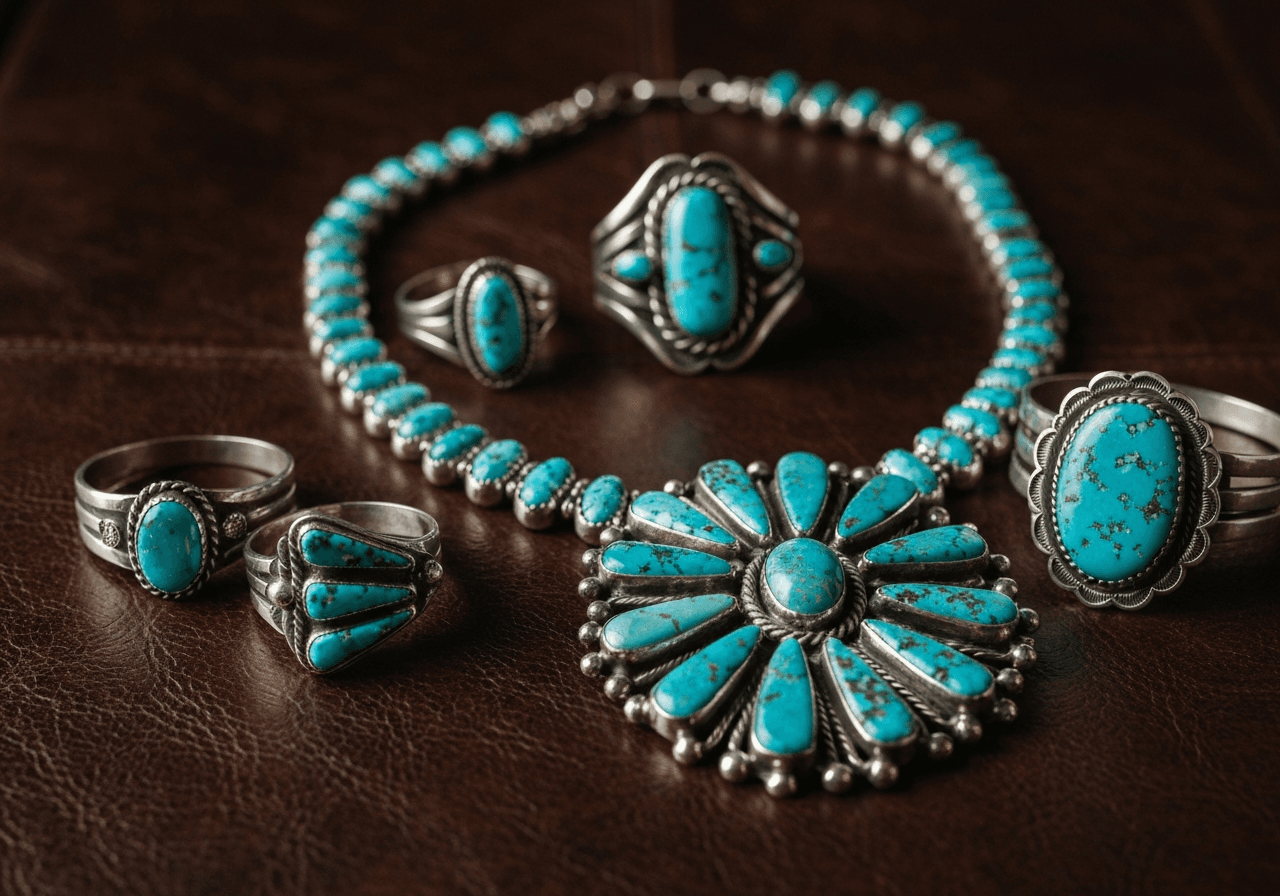
Turquoise quality varies enormously, and so do prices. Natural, untreated turquoise from famous mines (Lander Blue, Bisbee, Lone Mountain, Sleeping Beauty) commands 10-50x the price of treated or stabilized turquoise. A vintage Navajo squash blossom necklace with high-quality turquoise can sell for $2,000-$20,000+. Even simple turquoise rings with quality stones are worth $50-$200+. The market is complicated by widespread stabilization, dyeing, and synthetic turquoise. Knowing what you have is essential.
Key Factors That Affect Turquoise Jewelry Value
Understanding what drives the price of turquoise jewelry helps you get the most accurate valuation.
Stone Quality & Mine
Lander Blue (rarest): $300-$1,000+ per carat. Bisbee: $100-$500+/ct. Lone Mountain: $50-$200+/ct. Number 8: $20-$100+/ct. Sleeping Beauty (clean blue): $10-$50+/ct. Generic stabilized turquoise: $1-$5/ct. The mine of origin dramatically affects stone value.
Natural vs Treated
Natural/untreated turquoise: highest value. Stabilized (resin-hardened): 30-50% of natural value. Enhanced (color-treated): 10-20% of natural. Reconstituted (ground up and reformed): minimal value. Block turquoise (synthetic): $1-$5/ct.
Artist & Maker
Signed pieces by known Native American artists command premiums: Tommy Jackson, Vernon Haskie, Kirk Smith, Sunshine Reeves, the Begay family. Hallmarked pieces from established silversmiths: 1.5-3x unsigned. Tourist-grade (machine-made, import): lowest value.
Age & Style
Pre-1940 'old pawn' turquoise jewelry: $200-$20,000+ depending on quality. Mid-century (1940s-70s): $100-$5,000+. Modern artisan: priced on craftsmanship and stone quality. Squash blossom necklaces, concho belts, and cluster work are the most valued traditional forms.
Silver Work
Sterling silver weight adds base value. Quality silverwork (stamps, overlay, inlay, channel work) adds craftsmanship premium. Heavy old pawn pieces with substantial silver: valued for both metal and workmanship.
Tips for Valuing Turquoise Jewelry
Get the most accurate valuation by following these tips when photographing your turquoise jewelry.
Look for artist signatures or hallmarks on the silver. Signed pieces are worth more
Natural turquoise typically has a matrix (brown/black veining). perfectly uniform color may indicate treatment
Note the weight. Heavier pieces have more silver content as base value
Old pawn pieces often have smooth, worn bezels from decades of use. This patina is valued
Turquoise Jewelry Market Insights
The turquoise jewelry market benefits from Southwestern aesthetic popularity, cultural significance of Native American art, and genuine scarcity of high-quality natural turquoise. Famous mines like Lander Blue and Bisbee are largely depleted, creating fixed supply for top-quality stones. The market has a serious authenticity problem. Treated, synthetic, and imported turquoise is frequently misrepresented. Educated buyers pay strong premiums for documented natural turquoise from known mines.
Find Out What Your Turquoise Jewelry Are Worth
Upload a photo now and get a free AI-powered valuation in seconds. No sign-up required.
Turquoise Jewelry Valuation FAQ
How can I tell if turquoise is natural or treated?
Natural turquoise is often lighter, has a slightly chalky feel when dry, and shows natural matrix patterns. Stabilized turquoise is harder, darker, and more uniform. A jeweler can test with a hot needle (stabilized resin will smell). For valuable pieces, gemological testing is recommended.
What turquoise is most valuable?
Lander Blue ($300-$1,000+/ct) is the most valuable. Bisbee ($100-$500+/ct), Lone Mountain ($50-$200+/ct), and Number 8 ($20-$100+/ct) are also highly prized. The key is natural, untreated turquoise from documented mines.
Are squash blossom necklaces valuable?
Yes. Vintage squash blossom necklaces are among the most valuable turquoise jewelry. Quality vintage pieces: $500-$20,000+ depending on turquoise quality, silver weight, age, and artist. Tourist-grade modern squash blossoms: $100-$500.
Where can I sell turquoise jewelry?
For quality Native American pieces: Hindman Auctions, Heritage Auctions, or specialized Native American art dealers. eBay for all value levels. Santa Fe and Scottsdale galleries deal in fine turquoise jewelry. Avoid pawn shops for first offers. They pay the least.
Is old pawn turquoise valuable?
Generally yes. 'Old pawn' refers to Native American jewelry pawned at trading posts, typically pre-1970. These pieces have genuine age, often use high-quality natural turquoise, and represent authentic cultural heritage. Quality old pawn: $200-$20,000+ depending on piece and stone quality.